
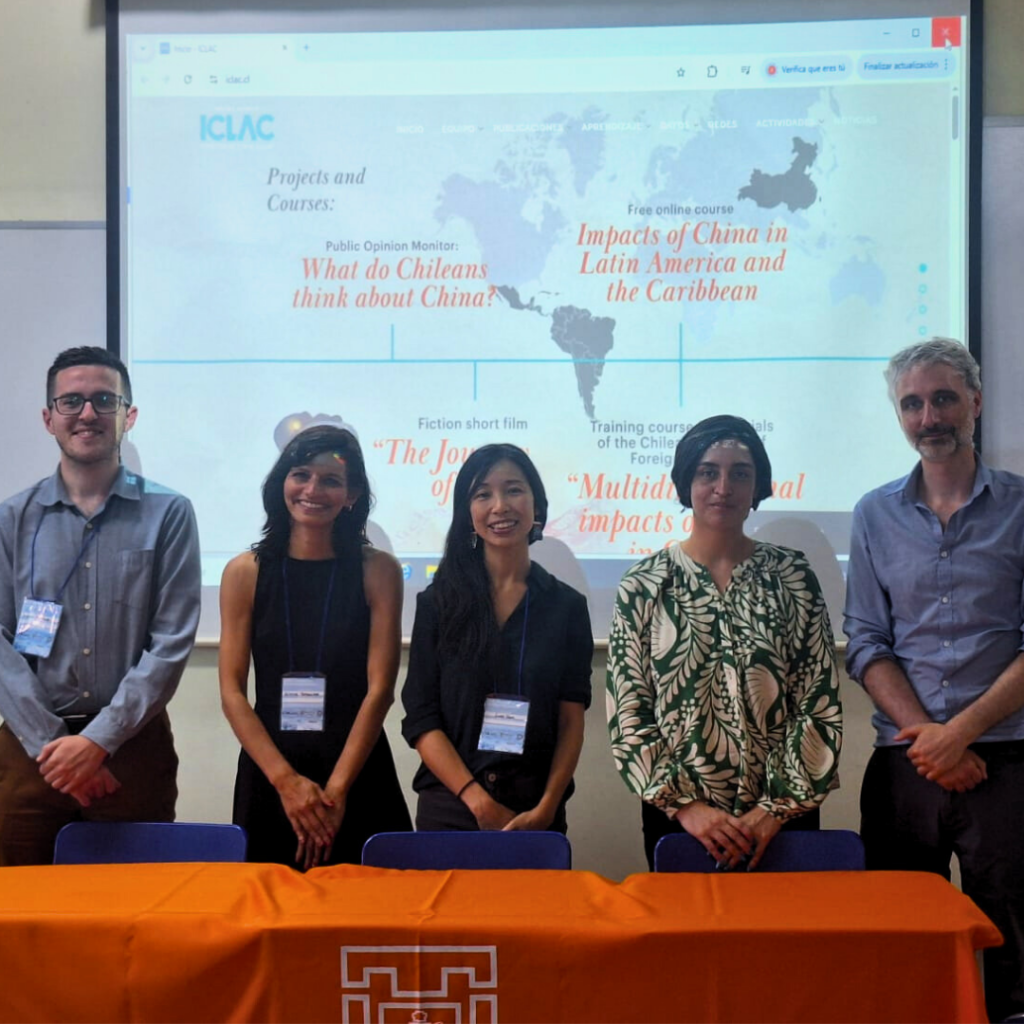
With notable participation from its researchers, the Millennium Nucleus ICLAC was present at the XXXI Migration Studies Conference, held on November 20th and 21st, 2025 , in the city of Iquique. The event, organized by the University of Tarapacá under the theme "Migrations in Latin America: From Control Policies to Acts of Resistance," brought together academics from various regions at the university's Esmeralda Campus.
In this context, ICLAC organized Panel 13: "Chinese Migration in Chile: Historical and Contemporary Perspectives", coordinated by researchers Lucas Maubert (ICLAC visiting researcher) and Patricia Palma (ICLAC principal investigator). The session, which was moderated by Sius-Geng Salinas, allowed for decentralizing the discussion and presenting new research on the Asian presence in the north and center of the country, addressing topics from diplomatic history and border control to contemporary identities.
During the session, five papers were presented that connected the past and present of Sino-Chilean relations José Miguel Vidal presented "Between Migration and New Horizons: Preliminary Notes on the Travel Diaries of Qing Diplomats in Latin America", while Patricia Palma delved into historical dynamics with her research "Migration Control and Corruption of Public Officials in the Entry of Chinese Immigrants to Chile (1900-1930)". Meanwhile, Lucas Maubert presented the work carried out with María Montt Strabucchi: "The Mobilization of the Chinese Community in Iquique in Response to the Second Sino-Japanese War".
The panel also addressed current and cultural perspectives. Carol Chan presented the research (also developed with María Montt Strabucchi) "I Would Like to Look More Chinese: Racialization and Chilean People of Chinese Descent", and Jessica Sequeira closed the panel with an interdisciplinary reflection titled "How to Set Lived Experience to Music?: Reflections on Composing a Soundtrack for the Television Series Letras Migrantes".
In addition to the panel organized by ICLAC, during the conference, cross-cutting themes such as gender and care, work and inequalities, education, interculturality and diversities, border studies, and political repression against foreigners during dictatorships in the Southern Cone were also discussed.